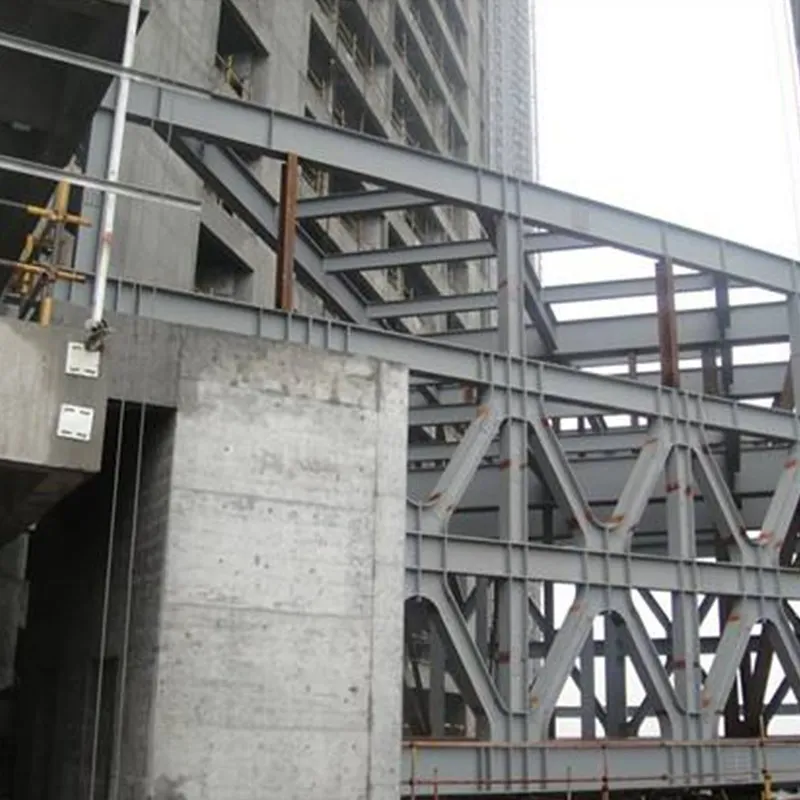
The installation of steel structure supports begins with foundation preparation and positioning measurements. Prior to installation, the precise location of the supports must be determined in accordance with the design drawings, and the ground or foundation must be inspected to ensure it is level and stable. Positioning measurements are then performed for embedded parts, anchor bolts, and foundation bolt holes to ensure that the support installation locations are accurate and that their horizontal and vertical alignments comply with design specifications.
Next comes component assembly and connection. Major structural components-such as columns, beams, and diagonal braces-are installed in the sequence specified in the design; a preliminary assembly is conducted first to verify the dimensions and fit of each component. During the assembly process, columns must be maintained in a vertical position, beams in a horizontal position, and diagonal braces installed at their exact designated locations. Components are secured to one another via bolted connections or welding; all connection points must be tightened or welded firmly to ensure the overall structural stability and reliability of the assembly. The entire support structure is then subjected to comprehensive checks for levelness, vertical alignment, and structural stability to confirm the absence of any looseness, deformation, or tilting. Load testing is performed if deemed necessary to ensure the support remains safe and reliable under actual load-bearing conditions. Concurrently, inspections are conducted on anti-corrosion coatings, bolt tightness, and weld quality. Upon completion of the installation, a detailed installation record is compiled to serve as a reference for future operation and maintenance activities.