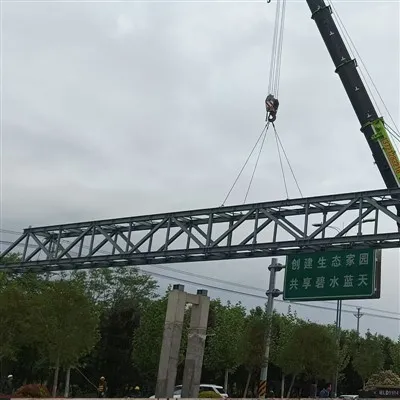
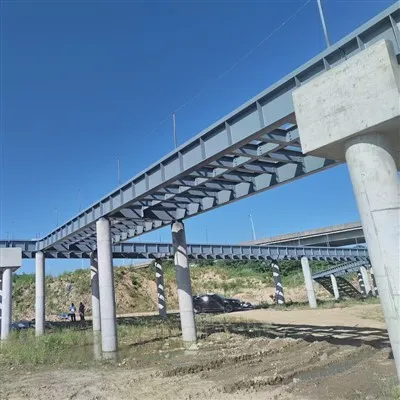
Hey there! As a supplier of Steel Truss Structure, I often get asked about how to calculate the dead load of a steel truss structure. In this blog, I'm gonna break it down for you in a way that's easy to understand.
What is Dead Load?
First things first, let's talk about what dead load actually is. Dead load refers to the permanent, stationary weight that a structure has to support. For a steel truss structure, this includes the weight of the steel members themselves, any attached roofing materials, insulation, and even the weight of any fixtures or equipment that are permanently attached to the truss.
Why is Calculating Dead Load Important?
Calculating the dead load is crucial for several reasons. For one, it helps ensure the structural integrity of the steel truss. If you underestimate the dead load, the truss might not be able to support the weight, which can lead to structural failure. On the other hand, overestimating the dead load can result in an over - engineered structure, which means higher costs.
Steps to Calculate the Dead Load of a Steel Truss Structure
Step 1: Determine the Weight of the Steel Members
The first step is to figure out the weight of the steel used in the truss. You can do this by looking at the cross - sectional area of each member and its length. The weight per unit length of steel can be found in steel tables, which are readily available online or in engineering handbooks.
Let's say you have a steel truss with different types of members, like chords and web members. You'll need to calculate the weight of each type of member separately. For example, if you have a chord with a cross - sectional area of (A) square inches and a length of (L) feet, and the weight per unit length of the steel is (w) pounds per foot, then the weight of that chord is (W = w\times L). Do this for all the members in the truss and sum them up to get the total weight of the steel members.
Step 2: Account for Roofing Materials
Next, you need to consider the weight of the roofing materials. Different roofing materials have different weights per square foot. For example, asphalt shingles might weigh around 2 - 4 pounds per square foot, while metal roofing could weigh around 1 - 3 pounds per square foot.
To calculate the weight of the roofing, measure the area of the roof that the truss supports. Let's say the area of the roof is (A_{roof}) square feet and the weight per square foot of the roofing material is (w_{roof}) pounds per square foot. Then the weight of the roofing is (W_{roof}=w_{roof}\times A_{roof}).
Step 3: Include Insulation and Other Attachments
Insulation is another factor to consider. The weight of insulation can vary depending on the type and thickness. For example, fiberglass insulation might weigh around 0.5 - 1 pound per square foot. Similar to the roofing, measure the area of the insulation and multiply it by the weight per square foot to get the weight of the insulation.
You also need to account for any other attachments, such as lighting fixtures, ventilation systems, or sprinkler systems. Find out the weight of each individual attachment and sum them up.


Step 4: Sum Up All the Weights
Once you've calculated the weight of the steel members, roofing materials, insulation, and other attachments, add them all together. This sum is the dead load of the steel truss structure.
Example Calculation
Let's say we have a simple steel truss structure. The total weight of the steel members is calculated to be 5000 pounds. The roof area is 1000 square feet, and we're using asphalt shingles that weigh 3 pounds per square foot, so the weight of the roofing is (3\times1000 = 3000) pounds. The insulation covers the same 1000 square - foot area and weighs 0.8 pounds per square foot, so the weight of the insulation is (0.8\times1000=800) pounds. There are also some lighting fixtures and other small attachments that weigh a total of 200 pounds.
The dead load of the steel truss structure is (5000 + 3000+800 + 200=9000) pounds.
Factors Affecting Dead Load Calculation
There are a few factors that can affect the dead load calculation. One is the type of steel used. Different grades of steel have different densities, which can impact the weight of the steel members. Another factor is the design of the truss. A more complex truss design might have more members, which will increase the dead load.
Also, the choice of roofing and insulation materials can vary widely in weight. For example, a thick layer of insulation will weigh more than a thin layer.
Tips for Accurate Dead Load Calculation
- Use Accurate Data: Make sure you're using up - to - date and accurate data for the weight of materials. Check the manufacturer's specifications for the steel, roofing, insulation, and other attachments.
- Consider Future Additions: If you know there will be additional fixtures or equipment added to the structure in the future, factor them into the dead load calculation.
- Get Professional Help: If you're not confident in your ability to calculate the dead load, it's a good idea to consult with a structural engineer.
Conclusion
Calculating the dead load of a steel truss structure is an important part of the design and construction process. By following the steps outlined above and considering the factors that can affect the dead load, you can ensure that your steel truss structure is safe and cost - effective.
If you're in the market for a Steel Truss Structure, Metal Structural Post, or need a Steel Structure Workshop, we're here to help. We have a wide range of high - quality products and can assist you with all your steel structure needs. Don't hesitate to reach out for a quote or to discuss your project further. Let's work together to make your construction project a success!
References
- "Structural Steel Design" textbooks
- Manufacturer's specifications for steel, roofing, insulation, and other materials